Candidate Trust & Data Security Survey Results

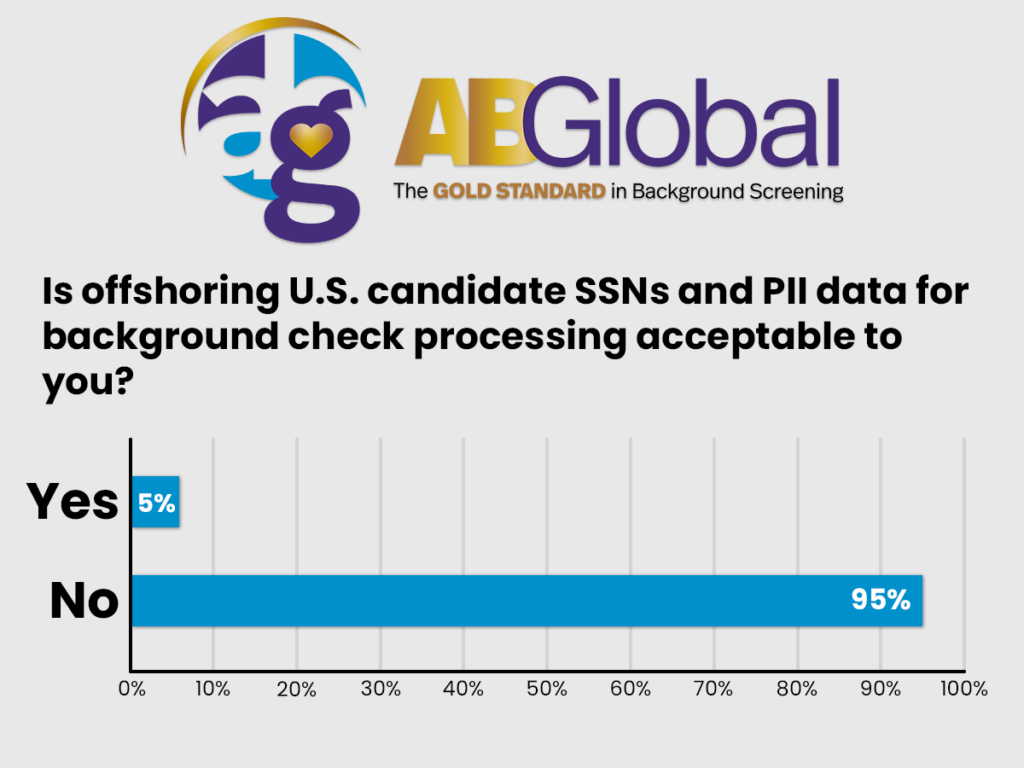
Our recent survey asked job seekers how they feel about having their personally identifiable information (PII) offshored during the background screening process, and the results reveal a clear pattern: candidates value transparency, data security, and trust in the hiring process. A significant majority expressed concern or hesitation when their data might leave the United States, underscoring the importance of keeping candidate information protected and managed responsibly.

Organizations that prioritize secure, U.S.-based data handling not only maintain compliance but also strengthen candidate confidence, improve hiring outcomes, and reinforce their reputation as trustworthy employers in a competitive hiring landscape.

Disclaimer: Percentages have been rounded to the nearest whole number for readability. To request exact figures or additional survey data, please contact Marketing@ABGlobalScreening.com

Picture of Professor Hootsworth

Professor Hootsworth

Professor Hootsworth guides AB Global, ensuring they remain true to their mission of delivering the Gold Standard in background screening. Whether he’s unraveling a tricky screening puzzle or delivering a lecture at Screening University, Hootsworth’s brown feathers and blue eyes have become a symbol of trust, integrity, and knowledge in the background screening world.
Subscribe To Our Blog

More Blog Posts

Accounting is critical and sometimes overlooked in the background screening process. Background checks are commonly associated with criminal records, employment verification, and reference checks. This data provides a deeper layer of insight into an individual’s financial behavior, integrity, and potential risk factors. Organizations often rely on financial information to make informed hiring decisions, particularly for roles that involve handling money, sensitive data, or strategic decision-making.
Drug testing has become a standard part of hiring and workplace compliance, but for many candidates, the experience can be more stressful than expected. One of the most common and misunderstood challenges is something called a shy bladder. While the name may sound informal, it represents a legitimate and well-defined situation that both candidates and employers should understand.
In today’s talent market, candidate engagement isn’t a “nice to have”—it’s the backbone of a strong hiring strategy. Job seekers expect transparency, speed, and respect at every stage. When communication stalls or processes drag on, even the most enthusiastic candidates can lose interest and drift toward competitors.